
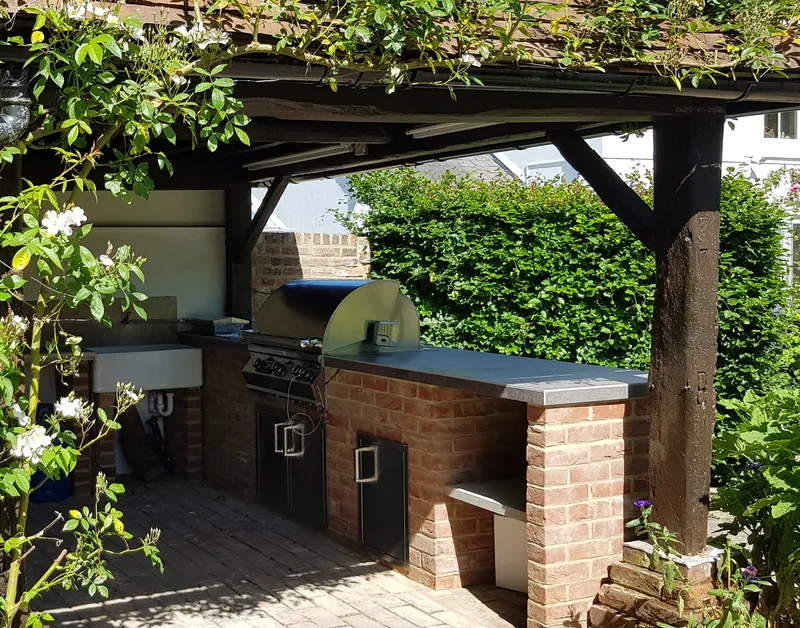
Designing a Permanent Outdoor Kitchen
30 June 2026
With summer social calendars in full swing across Kent, the appeal of moving the heart of the home into the garden is at an all-time high. In our previous guide, The Ultimate Host’s Guide to Outdoor Entertaining, we explored the social dynamics of zoning your garden for seamless hosting. In this article, we shift focus to the technical, permanent design execution of a premium outdoor kitchen.
Key Takeaways for Building a Premium Outdoor Kitchen
- Timber frames remain the most popular request in the UK for their natural warmth; choosing the right species of wood and expecting some seasonal weathering ensures a lifetime of service.
- Consider Airflow Patterns – Position cooking zones so that nearby structures don’t trap smoke near guest seating and integrate a suitable extractor hood if building beneath an outdoor roof structure.
- Design with Winterisation in Mind – Ensure all sub-surface water pipes are engineered with accessible isolation valves so the entire system can be easily drained before the winter freeze.
- Select Non-Porous Surfaces to guarantee zero porosity and total scratch, stain, and UV resistance.
Transitioning from a beautifully zoned patio to a fully functioning, permanent luxury outdoor kitchen requires moving past lifestyle layouts and diving into architectural specifics.
When executing a high-end contemporary garden design, building an outdoor cooking space is an investment in your property’s infrastructure. To ensure your custom kitchen withstands the elements and functions flawlessly year-round, our garden designers focus on three core technical pillars: material resilience, structural engineering, and utility integration.
Material Resilience: Surfaces That Survive the Kent Climate
A premium outdoor kitchen cannot rely on indoor construction methods. The materials selected must endure bitter Kent winters, frost-thaw cycles, and summer heatwaves.
Timber frames are by far the most popular request, with many homeowners favouring the warm, natural aesthetic of wood. While there is sometimes a misconception that timber frames can be prone to structural failure, this is entirely dependent on the type of wood chosen. Different species behave uniquely over time; for instance, premium oak will naturally develop characterful cracks as it seasons, which is a desirable architectural trait rather than a defect. Similarly, any wood that is stained or treated is naturally likely to fade over time under exposure to the elements, requiring simple, routine maintenance to keep it looking its best.
For homeowners seeking a more contemporary aesthetic with minimal upkeep, aluminium-framed and composite-clad outdoor kitchen structures have become increasingly popular. Powder-coated aluminium offers exceptional resistance to corrosion, warping and UV exposure, while high-quality composite cladding replicates the appearance of timber without the need for regular staining or painting. These modern systems deliver clean architectural lines and outstanding longevity, making them an excellent choice for contemporary gardens where durability and low maintenance are key priorities.
While polished concrete countertops offer a striking modern garden design aesthetic, they must be meticulously sealed to prevent oil and wine stains. Durable, low-maintenance alternatives include sintered stone and outdoor-grade porcelain, which provide zero porosity and are scratch and completely UV resistant.
Technical Zoning and Airflow Engineering
An outdoor kitchen must balance two conflicting requirements: it needs to be close enough to the main dining zone for social cohesion, but engineered to keep smoke, intense heat, and cooking odours away from your guests.
When positioning a built-in gas grill or wood-fired pizza oven beneath a pergola or near boundary walls, airflow should be considered. However, while wind direction is an important factor, local air currents are frequently disturbed by nearby buildings, fences, and garden walls, making an exact mathematical assessment incredibly difficult.
We combine decades of on-site experience and observation skills with your experience of your own garden to find the most sheltered, practical position for your grill!
If you are building directly against a wall or beneath a roof structure, for safety reasons, we advise integrating a suitable extractor hood or specialised heat shield to protect your vertical surfaces and manage smoke effectively.
Subsurface Infrastructure: The Invisible Essentials
The difference between a standard BBQ station and a true luxury outdoor kitchen lies entirely beneath the paving. Before a single stone is laid, comprehensive groundworks and utility lines must be engineered into the landscape plan:
- Gas Line Mains connection or safely ventilated LPG chamber
- Armoured Electrics for task lighting, rotisseries, and refrigeration
- Water & Drainage (Mains feed + insulated pipework + gravity-fed waste)
Task lighting, prep-zone sockets, rotisserie motors, and outdoor refrigeration all require a dedicated, RCD-protected electrical supply. This is usually achieved by laying the main power feed securely in the ground during the initial groundwork phase, bringing electricity safely to the kitchen site without unsightly visible cables.
If your design includes an outdoor sink, it requires a dedicated water feed and waste management system. These lines must be engineered with accessible isolation valves, allowing you to easily drain the pipework completely ahead of the winter freeze to prevent burst pipes.
Making the Kitchen Part of Your Garden’s Architecture
A masterfully executed outdoor kitchen shouldn’t look like an afterthought dropped onto a patio! It should feel entirely organic to the architecture of your home and the wider landscape. By matching the lines, textures, and materials of your retaining walls or home extension to the kitchen island, you create a cohesive, visually striking extension of your living space.
And, honestly, that’s the real value of a professional garden design and build for your outdoor kitchen and dining space; in depth knowledge of what’s needed, familiarity with the Kent climate, combined with experience of how it will look in your garden. For further reading, take a look at How We Bring Your Garden Project to Life: From Concept to Completion.
Whether you are looking to integrate a sleek, minimalist cooking station or a full-scale chef’s setup complete with prep counters and integrated refrigeration, handling the structural engineering early guarantees a lifetime of effortless summer hosting.
Ready to transform your outdoor space?
If you are planning a comprehensive garden transformation in Kent or Canterbury, contact our Garden Design Team to discuss your outdoor kitchen project.
Contact us via this form or call 01227 733447 and we’d be pleased to help.