
New Build Garden Ideas: How to Turn a Blank Canvas into a Beautiful Garden
07 August 2026
Moving into a new-build home is an exciting time. Everything feels fresh and full of possibility - but when you look out of the back doors at your garden, you may be faced with a very different picture: a square lawn, a perimeter fence and little else.
For many new-build homeowners, the garden can feel like the final piece of the puzzle. The house is finished, but the outdoor space doesn't yet feel like it belongs to you.
The good news is that a blank canvas also gives you an opportunity. With thoughtful garden design, the right planting and a clear plan, even a simple new-build garden can become a beautiful, characterful space that feels established, welcoming and completely your own.
Whether you're looking for new-build garden ideas in Kent or have recently moved into a new home elsewhere, here are some ways to transform your outdoor space.
3 Key Takeaways for Designing your New Build Garden
1. Start with how you want to use the garden - think about your lifestyle first, then design the space around the way you want to live, relax and entertain outdoors.
2. Don't overlook what's beneath the surface - soil quality, drainage and compaction can all affect the success of a new-build garden, so it's important to address these issues before investing heavily in planting.
3. Plan for the future - a beautiful garden isn't created overnight. Choose plants, trees and materials with the next five, ten and twenty years in mind, allowing your garden to mature and evolve.
A new-build garden may start as a blank canvas, but that gives you the freedom to create a space that works specifically for you, your home and the way you want to live.
The most successful new-build garden designs usually combine:
- A clear plan for how the garden will be used
- Strong connections between the house and outdoor space
- Defined areas for dining, relaxing and entertaining
- Thoughtful planting to introduce colour, structure and biodiversity
- Trees and larger plants to create height and maturity
- Privacy solutions that don’t make the garden feel enclosed
- High-quality hard landscaping to provide a strong foundation
- Features that add personality and reflect the character of the property
The key is to think about the garden as a whole rather than simply filling the space with plants. A well-designed garden should feel like a natural extension of your home.
1. Start by Thinking About How You Want to Use the Garden
Before choosing plants, paving or garden furniture, think about what you actually want your garden to do.
Do you want somewhere to entertain friends and family? A safe space for children to play? A peaceful retreat where you can relax after work? Perhaps you'd like an outdoor dining area, somewhere to grow vegetables or a garden that attracts birds, bees and butterflies.
Most gardens need to accommodate more than one purpose, particularly for busy family homes. The answer is often to create distinct zones rather than expecting one large lawn to do everything.
For example, you could include:
- A dining terrace close to the kitchen
- A comfortable seating area for relaxing
- An open area of lawn for children
- A more natural planting area for wildlife
- A secluded corner for quiet moments
- A pathway that connects the different spaces
This approach can make a relatively straightforward new-build garden feel much more considered and interesting.
2. Create a Strong Connection Between Your Home and Garden
One of the biggest opportunities with a new-build property is creating a sense of flow between the house and garden.
If you can see straight from your kitchen or living room into the garden, consider how the two spaces work together. The materials, colours and shapes you choose outside can help create a visual connection with the architecture of your home.
A well-designed terrace immediately outside the house can create a natural transition from indoors to outdoors. Continuing similar tones or materials through the space can also make the garden feel larger and more cohesive.
The garden shouldn't feel like an afterthought at the end of the house. Instead, think of it as another room — one that simply happens to have a roof made of sky.
3. Break Up the Square of Lawn
Many new-build gardens begin with a fairly predictable layout: a rectangle of lawn surrounded by fencing. There's nothing wrong with having a lawn but relying on one large expanse can make a garden feel flat and unfinished.
Instead, consider introducing different levels, planting beds, paths and terraces to break up the space. You could use:
- Curved or angled planting borders
- A paved terrace
- Stepping stones through planting
- Raised beds
- A change in paving material
- A pergola or other architectural structure
- A pathway leading towards a focal point
The aim isn't necessarily to fill every available inch. It's about creating a sense of structure and giving the eye somewhere to travel.
This is particularly important in smaller new-build gardens, where clever zoning can make the space feel more generous without taking away valuable usable areas.
4. Introduce Character with Thoughtful Planting
One of the biggest challenges with a new-build garden is that everything is new. Young trees and newly planted borders can take time to establish, but that doesn't mean your garden has to look sparse while you wait.
A good planting scheme can introduce character from the very beginning by combining plants of different heights, textures and forms.
Consider using a mixture of:
- Evergreen plants for year-round structure
- Flowering perennials for seasonal colour
- Ornamental grasses for movement and texture
- Shrubs to provide substance and screening
- Climbers to soften fences and walls
- Trees to introduce height and maturity
Rather than planting everything in isolation, repeat key plants throughout the garden. This creates rhythm and helps the design feel intentional. A planting scheme should also reflect the conditions of your garden. Soil type, aspect, exposure and moisture levels will all influence which plants are likely to thrive.
This is particularly important in new-build gardens, where the soil may have been disturbed during construction or may not be as healthy as it first appears.
5. Add Trees for Height, Structure and a Sense of Maturity
Trees can have a transformative effect on a new-build garden. Even a single carefully positioned tree can draw the eye upwards, provide seasonal interest and make a garden feel more established.
The right tree can also provide:
- Shade during warmer months
- A habitat for wildlife
- Screening from neighbouring properties
- Seasonal colour
- A strong focal point
- Architectural structure
The key is to choose the right tree for the scale of your garden and position it carefully. In a smaller garden, a multi-stemmed tree or smaller ornamental variety may be more appropriate than a large, fast-growing species. In larger gardens, several trees can help create a stronger sense of enclosure and maturity over time.
Trees are a long-term investment, so it's worth taking the time to consider how they will look not just next year, but in ten or twenty years.
6. Solve Privacy Problems Without Closing Yourself In
Privacy is one of the most common concerns for new-build homeowners. New housing developments can often mean gardens are positioned close together, with neighbouring properties overlooking outdoor spaces from several directions. The temptation can be to put up tall fencing or plant a wall of evergreen hedging.
However, privacy doesn't have to mean creating a garden that feels enclosed. Layered screening can often be a more effective approach. A combination of trees, hedging, shrubs and planting can break up sightlines while still allowing light into the garden.
- Pleached trees, for example, can provide elevated screening where privacy is needed above fence height.
- Multi-stemmed trees and carefully positioned shrubs can also obscure specific views without making the whole garden feel closed off.
For more ideas, take a look at our guide to 5 Creative Ways to Add Privacy to Your New Build Garden.
7. Make the Most of Your Garden's Levels
Not every new-build garden is perfectly flat — and if yours isn't, that can actually create opportunities for a more interesting design. Changes in level can be used to define different areas and introduce a sense of movement through the garden.
Depending on the site, you might consider:
- Raised planting beds
- Retaining walls
- Steps
- Terraces
- Built-in seating
- Different levels of planting
Even subtle changes in height can help divide a garden into distinct spaces. If you're dealing with a sloping garden, it's important to consider how water will move through the site, as well as how the different levels will be constructed and accessed. A professional garden designer can help ensure that the design is both beautiful and practical.
8. Don't Forget About Drainage and Soil
It can be tempting to start planting as soon as you move into your new home. However, it's worth taking a step back and understanding what you're working with first.
New-build gardens can sometimes suffer from compacted soil, poor drainage or inadequate topsoil following the construction process. In some cases, rubble and construction waste may also have affected the soil beneath the surface. These issues can have a significant impact on the health of your plants and the long-term success of your garden.
Before investing heavily in planting, consider:
- What type of soil do you have?
- Does water drain away effectively?
- Is the ground compacted?
- Is there enough good-quality topsoil?
- Are there areas that become waterlogged?
- Does the garden have a suitable irrigation strategy?
Addressing these issues early can save time, money and frustration later.
If drainage is a concern, our guide to Garden Drainage Solutions for New Homes explores some of the issues that can affect new-build gardens and the solutions that may be available.
9. Create a Focal Point
A new-build garden can sometimes lack a sense of identity. One way to change this is by introducing a strong focal point.
This could be:
- A specimen tree
- A water feature
- A sculpture
- A fire pit
- A pergola
- An outdoor kitchen
- A beautiful seating area
- A planted border
- A garden room
The focal point doesn't necessarily need to be dramatic. It simply needs to give the garden a sense of purpose and provide something that draws the eye.
Think about what you can see from inside the house, too. A carefully positioned focal point can become part of the view from your kitchen or living room, giving you something to enjoy throughout the year.
10. Use Materials to Give Your Garden Its Own Identity
New-build homes can sometimes feel quite uniform, particularly when several properties have been built at the same time. Your garden is an opportunity to introduce individuality.
Hard landscaping materials can play a significant role in this. Paving, brick, stone, timber and gravel can all influence the character of the space. When choosing materials, consider both the architecture of your home and the wider Kent landscape.
A contemporary property might suit clean lines and simple materials, while a more traditional home could benefit from natural stone, brickwork or softer planting. The goal isn't necessarily to match the house exactly. Instead, think about creating a relationship between the architecture and the garden so that the two feel connected.
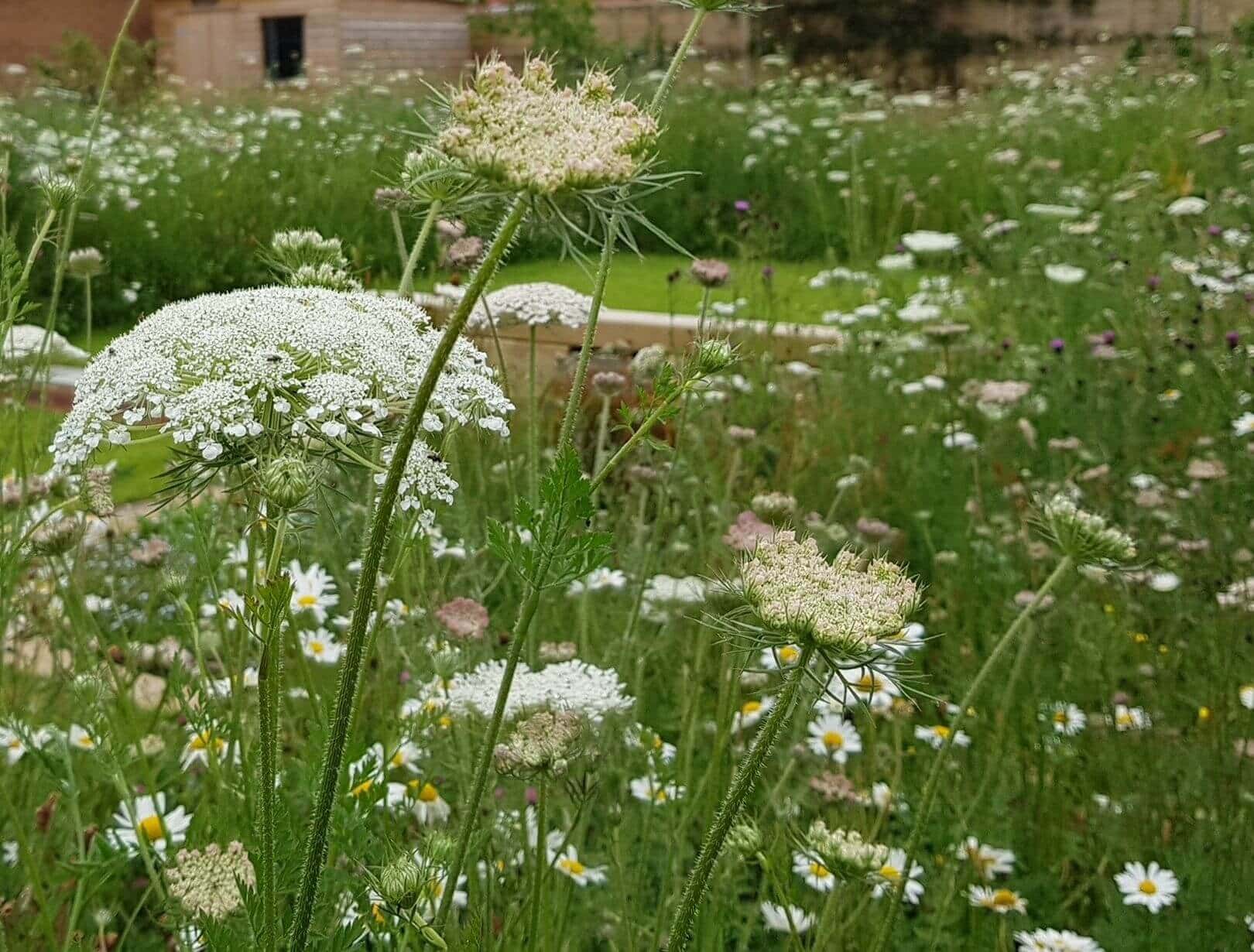
11. Design for Wildlife from the Start
A new-build garden is also an opportunity to create a valuable habitat for wildlife. Rather than treating wildlife as something that happens naturally over time, you can build biodiversity into the design from the beginning.
Consider incorporating:
- Nectar-rich flowers for pollinators
- Native and wildlife-friendly planting
- Trees and shrubs that produce berries
- Water sources
- Log piles or natural habitat areas
- Dense planting for shelter
- A mix of evergreen and deciduous plants
A wildlife-friendly garden doesn’t need to look wild or untidy – a concern we hear occasionally! Thoughtful garden design can combine structure and biodiversity, creating a space that feels beautiful while supporting nature. For homeowners in Kent, this can be a particularly rewarding way to connect a new garden with the wider landscape around it.
12. Think About the Garden as It Will Look in Five Years' Time
Perhaps the most important thing to remember when designing a new-build garden is that it won't stay new forever. Plants will grow. Trees will mature. Hedges will become denser. Materials will weather and soften. A successful garden design takes this evolution into account.
It can be tempting to plant everything densely to make a new garden look established immediately, but giving plants enough space to grow will often result in a healthier and more balanced garden in the long term. Think about the garden as a living design that will evolve with you and your home.
This is one of the reasons professional garden design can be so valuable. A good designer considers not only how a garden looks when it is first completed, but how it will develop over the years.
Bringing Your New Build Garden to Life
A new-build garden may begin as a blank canvas, but it doesn't have to stay that way. With the right approach, a simple lawn and boundary fence can become a garden full of character, structure and life. You're unlikely to use all of our suggestions above in one garden! The key is to look beyond the immediate appearance of the space and think about how you want to use it, how it connects with your home and how it will evolve over time.
From carefully considered planting and mature trees to outdoor living spaces, wildlife-friendly features and creative screening, there are countless ways to make a new-build garden feel truly your own.
At Haywood Landscapes, we have been advising clients and building beautiful outdoor spaces across Kent and the surrounding areas for over 30 years. We design and create gardens that are tailored to the people who use them and the places where they sit.
Whether you're starting with a completely blank canvas or looking to transform an uninspiring outdoor space, thoughtful garden design can make all the difference.
If you’re ready to transform your garden, contact us here or call us on 01227 733447 to learn more about our landscaping services.